
What Is Pecorino del Cilento? Origin and Flavour
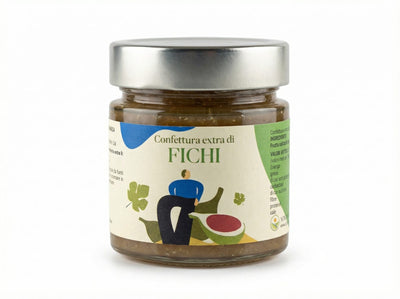
 | From our selection Fig JamHandmade, no preservatives. € 7,90 Discover → |
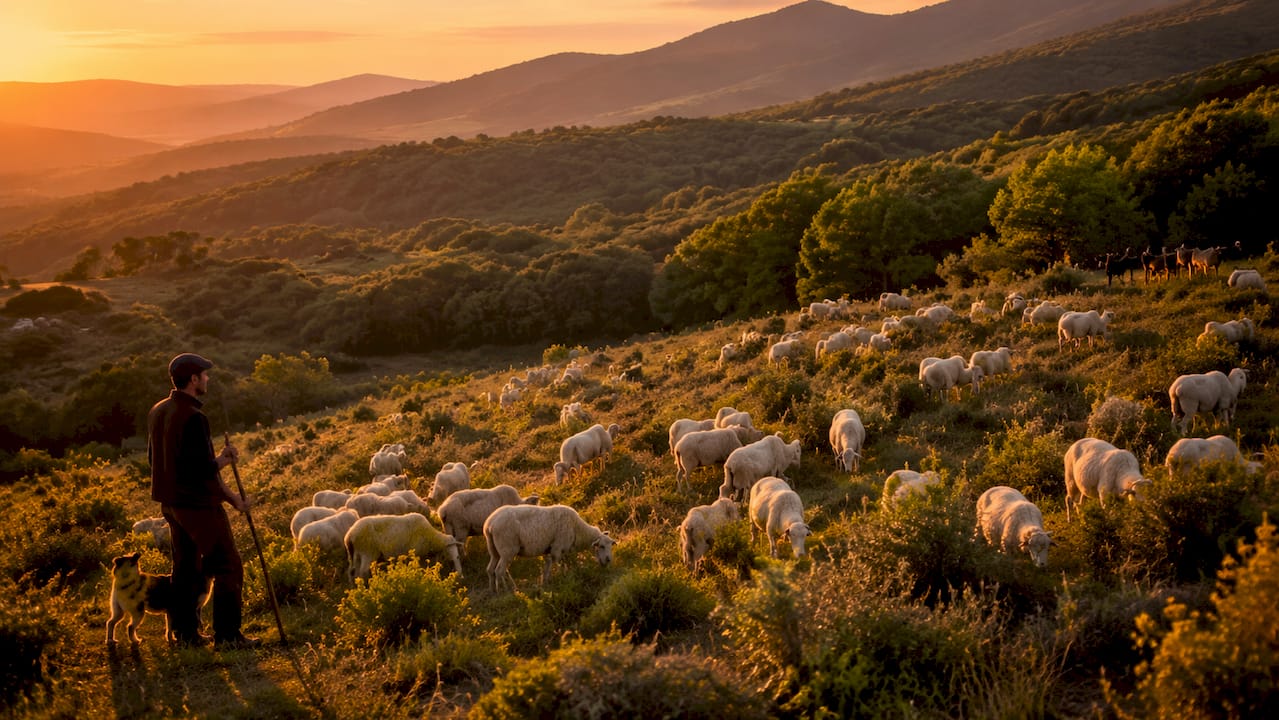
Pecorino del Cilento is a traditional hard cheese made from pure sheep’s milk, produced only in Cilento in southern Campania. Its unmistakable aroma comes from the wild herb pastures where the sheep graze on myrtle, thyme and wild fennel. If you’re wondering what sets Pecorino del Cilento apart from other pecorinos, the answer is simple: it’s the marriage of additive-free artisan production, regional biodiversity and a maturing tradition that gives the cheese an aromatic depth no industrial product can match.
What Is Pecorino del Cilento and Where Does It Come From?
Pecorino del Cilento is a matured sheep’s-milk cheese from the province of Salerno, inside the Parco Nazionale del Cilento—one of southern Italy’s most biodiverse landscapes. The word “pecorino” derives from the Italian “pecora” (sheep) and generally denotes any sheep’s-milk cheese. Yet the Cilento version is no generic pecorino; it is inseparable from the landscape and the diet of the animals that graze there.
The high biodiversity of the Parco Nazionale del Cilento is mirrored directly in the region’s cheeses. Sheep absorb a broad spectrum of wild herbs, and that diversity is tasted in the milk—and therefore in the finished cheese. This is no accident, but the result of a thousand-year-old pastoral tradition still tended by small family farms today.
Anyone who knows the culinary specialties of Cilento understands that Pecorino del Cilento is not a niche product for cheese connoisseurs alone; it is a cornerstone of everyday Mediterranean cooking in the region. You’ll find it on every rustic wooden board, paired with local pasta and in recipes handed down for generations.
How Is Pecorino del Cilento Made?
The process follows a centuries-old craft that has changed little over time. Each step contributes to the cheese’s character and quality.
- Milking: Sheep graze on natural pastures within the Parco Nazionale del Cilento. Their milk is rich in flavour because the animals feed on wild Mediterranean herbs such as myrtle, thyme and fennel.
- Pasteurisation & Coagulation: The sheep’s milk is pasteurised, then set with natural calf rennet. Traditionally the rennet comes from the stomachs of young lambs, ensuring gentle, aromatically precise coagulation.
- Curd Handling: The curd is cut, heated and pressed. The size of the curd grains greatly influences the final texture.
- Salting: The wheels are either brined or dry-salted. Salt naturally preserves the cheese and encourages rind formation.
- Maturation: Pecorino del Cilento matures in cool, well-ventilated rooms. Ageing time varies according to the desired profile and markedly affects texture and aroma. Young cheeses are creamier and milder; older wheels become firmer and more piquant.
No preservatives, colourants or artificial flavours are ever used. This isn’t a marketing claim—it’s a craft imperative: additives would destroy the natural aromatic profile created by pasture grazing.
Pro tip: When buying, look for “latte di pecora” (sheep’s milk) on the label to ensure you’re getting authentic Pecorino del Cilento and not a blended version.
What Does Pecorino del Cilento Taste Like?
The flavour is bold, spicy and aromatically complex. We like to say it sings on the tongue: a melody of herbs, salt and a pleasant piquancy that varies with age.
Key sensory notes at a glance:
- Aroma: Myrtle, thyme and wild fennel notes shape the bouquet. These aromas come directly from the sheep’s diet and are found in no other pecorino in this combination.
- Texture: Ranges from creamy-soft in young wheels to firm and slightly crumbly in mature ones. The natural, slightly rough rind is a hallmark of true craftsmanship.
- Piquancy: Young pecorinos are mild and faintly sweet. With longer ageing they develop a spicy bite that makes the cheese an ideal partner for robust dishes.
- Finish: Long and lingering, with a gentle herbal aftertaste that evokes a walk through the Cilento macchia.
Experts recommend enjoying Pecorino del Cilento on its own or with local bread to experience its full sensory impact. Accompaniments can easily mask the delicate herbal notes that make this cheese unique.
The biodiversity of the Parco Nazionale del Cilento is the decisive factor behind this aromatic richness. A cheese made elsewhere—even from sheep’s milk—cannot replicate the profile. That is the essence of what sets Pecorino del Cilento apart.
Pecorino del Cilento vs. Cacioricotta: What’s the Difference?
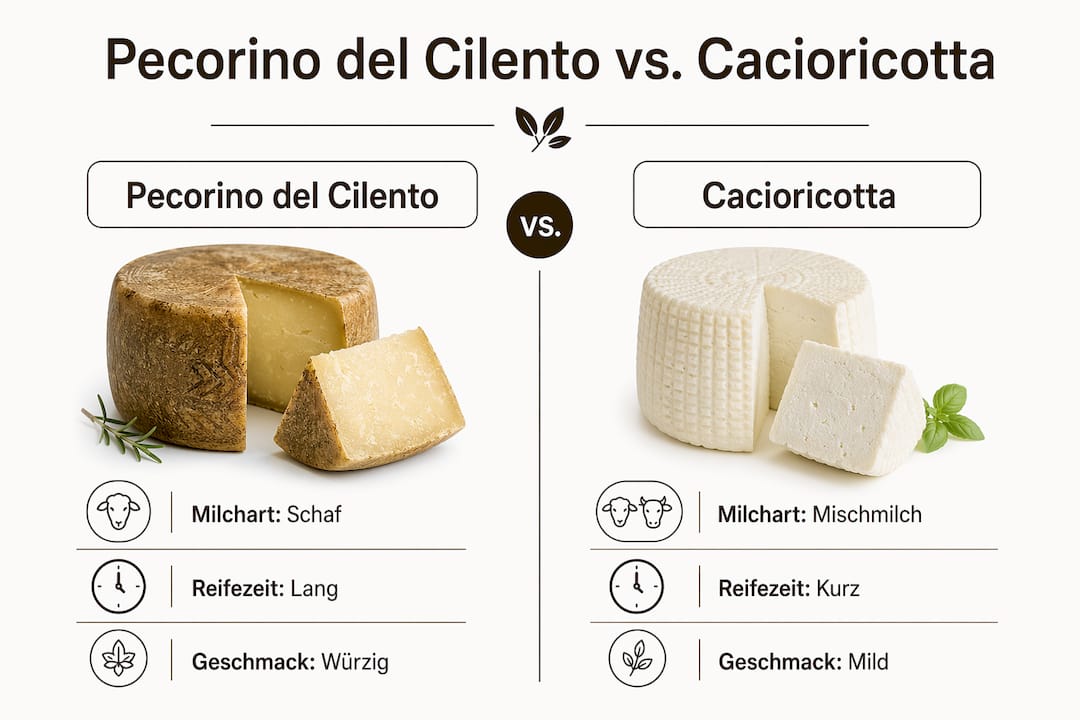
A frequent mix-up occurs between Pecorino del Cilento and Cacioricotta del Cilento. Both hail from the same region but differ fundamentally in milk type, production method and texture.
| Feature | Pecorino del Cilento | Cacioricotta del Cilento |
|---|---|---|
| Milk type | Pure sheep’s milk | Blend of sheep’s and goat’s milk |
| Production method | Classic cheese-making with rennet | Hybrid cheese-ricotta technique |
| Texture | Firm to hard, depending on age | Semi-firm, grainy, less compact |
| Ageing time | Several weeks to months | Shorter, often consumed fresh |
| Flavour | Bold, spicy, aromatically complex | Milder, slightly tangy, less intense |
| Uses | Grating, cooking, cheese boards | Eaten fresh, in salads, light dishes |
Pecorino is a pure sheep’s-milk cheese; Cacioricotta is a mixed-milk product made with a special technique. This distinction matters because each cheese plays a different culinary role. Using Cacioricotta in place of Pecorino del Cilento will yield a fundamentally different flavour.
Pro tip: For dishes that demand an intense, spicy cheese flavour, always choose aged Pecorino del Cilento. Cacioricotta is better suited to fresh, light preparations where mildness is desired.
Knowing the difference protects you from misinformation and helps you use each cheese appropriately. Anyone familiar with the typical products of Cilento quickly recognises that the region offers remarkable cheese diversity, with every variety occupying its own niche.
How to Use Pecorino del Cilento in the Kitchen
Pecorino del Cilento is an emblem of Mediterranean cuisine, lending classic dishes a regional identity that goes far beyond mere cheese flavour. Its kitchen use follows a few clear principles that bring out the best of its aromatic profile.
Classic applications:
- Cacio e Pepe del Cilento: The most famous use. In this regional take on the Roman classic, Pecorino del Cilento brings a complex aroma that pairs with local pasta and freshly cracked black pepper. The result is more intense and characterful than the original Roman version.
- Grated over pasta: Aged Pecorino del Cilento grates beautifully and suits any pasta dish that can handle a bold cheese note. It pairs especially well with tomato-based sauces.
- Cheese board: Served on its own with local bread, confettura or sun-dried tomatoes in extra-virgin olive oil. The contrast between the cheese’s spice and the sweetness of a confettura is a sensory experience.
- Melted: Thin slices of young pecorino melt wonderfully, giving vegetable or meat dishes an aromatic crust.
- Antipasto platter: Alongside antipasti such as peppers or aubergines sott’olio, Pecorino del Cilento shines as part of a Mediterranean starter.
Authentic pairings with local ingredients elevate the sensory experience and respect Cilento’s culinary tradition. The cheese calls for partners that either complement its intensity or deliberately contrast it.
When cooking, remember: aged Pecorino del Cilento should be used sparingly, as its piquancy intensifies with heat. One to two tablespoons of freshly grated cheese are enough for a single portion of pasta. Younger wheels can be used more generously thanks to their milder nature.
Key Takeaways
Pecorino del Cilento is a pure sheep’s-milk cheese from the Parco Nazionale del Cilento whose aromatic profile—myrtle, thyme and fennel—comes directly from pasture grazing, setting it apart from every other pecorino.
| Point | Details |
|---|---|
| Origin & milk type | Made exclusively from sheep’s milk in the Parco Nazionale del Cilento, province of Salerno, Campania. |
| Aromatic profile | Herbs such as myrtle, thyme and wild fennel from the pastures shape aroma and flavour directly. |
| Difference from Cacioricotta | Cacioricotta contains goat’s milk and is milder; Pecorino del Cilento is pure sheep’s milk with deeper piquancy. |
| Culinary uses | Ideal grated over pasta, in Cacio e Pepe del Cilento and on a cheese board with confettura or antipasti. |
| Buying tip | Look for “latte di pecora” on the label and buy from regional producers or specialty fine-food shops. |
My Personal Take on Pecorino del Cilento
Over the past few years I have tasted many cheeses from southern Italy, but Pecorino del Cilento surprised me in a way I did not expect. The first bite was a revelation: not the anticipated sharpness of an aged Pecorino Romano, but something far more layered, almost botanical.
What truly impresses me is the cheese’s honesty. It hides nothing. Every herbal note you taste comes straight from the Cilento landscape. This isn’t marketing; it’s biology. The sheep eat what the macchia offers, and the cheese carries that information within itself.
I also notice an interesting trend: chefs and gourmets are discovering Pecorino del Cilento as an alternative to better-known pecorinos because it brings a regional depth increasingly valued in modern cuisine. Reinterpreting classic recipes with local ingredients is not a passing fad; it strengthens the identity of entire regions.
My recommendation for anyone who hasn’t yet met this cheese: buy a young wheel and an aged one at the same time. Taste both on their own, then with bread, then in a simple pasta dish. The comparison will teach you more about cheese and maturation than any book.
— carmine
Cilento Specialities from Minnelea: The Perfect Companion
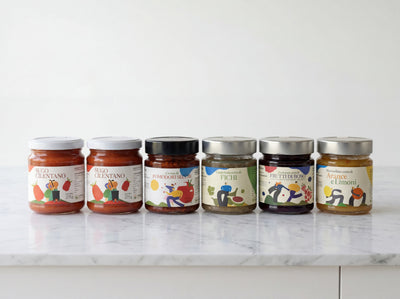
Pecorino del Cilento tastes best when paired with products from the same landscape. Minnelea brings exactly these products to you: artisan confetture, antipasti in extra-virgin olive oil and Mediterranean sauces, all made in small batches from select Cilento ingredients.

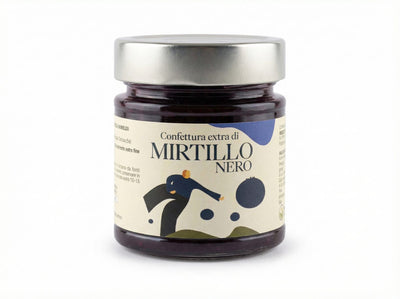
A slice of Cilento fig or strawberry alongside a piece of aged Pecorino del Cilento on the cheese board is a pairing we recommend again and again. The artisan confetture from Minnelea are ideal for this: fruity, not overly sweet, with an aromatic profile that beautifully contrasts the cheese’s spice. If you plan to use the cheese in a pasta dish, the traditional Cilento tomato sugo provides an authentic base that matches the intensity of the pecorino perfectly.
FAQ
What exactly is Pecorino del Cilento?
Pecorino del Cilento is a matured hard cheese made from pure sheep’s milk, produced in the Parco Nazionale del Cilento, province of Salerno, Campania. Its aroma is shaped by the herb-rich pastures where the sheep graze on myrtle, thyme and wild fennel.
How does Pecorino del Cilento differ from Pecorino Romano?
Pecorino Romano is a widely distributed industrial cheese with pronounced saltiness and uniform sharpness. Pecorino del Cilento is artisan-made, aromatically complex and carries the botanical notes of Cilento’s pastures—notes Pecorino Romano simply doesn’t have.
Can I buy Pecorino del Cilento in Germany?
Yes, Pecorino del Cilento is available in German delicatessens, Italian specialty shops and through specialised online retailers. Look for the origin “Cilento” and the ingredient “latte di pecora” (sheep’s milk) on the label.
Which age is best for cooking?
Aged Pecorino del Cilento is ideal for grating over pasta or in Cacio e Pepe because its piquancy carries the dish aromatically when heated. Younger wheels are better suited to the cheese board or light baked dishes.
Does Pecorino del Cilento pair with confettura?
Absolutely. The pairing of spicy Pecorino del Cilento with a fruity confettura is a classic Mediterranean cheese experience. Fig, strawberry or citrus confetture contrast the cheese’s sharpness and highlight its herbal notes.
Further Reading
- Why Cilento Products Are Truly Special – Azienda Agricola Minnelea
- Typical Cilento Products: The Gourmet Guide – Azienda Agricola Minnelea
- What Is Cilento Cuisine? Tradition, Ingredients & Signature Dishes – Azienda Agricola Minnelea
- Cilento Sun-Dried Tomatoes in EVOO 200g · Minnelea – Azienda Agricola Minnelea