
What Is the Piennolo Tomato? Origin and Flavor
 | From our selection Fig JamHandmade, no preservatives. € 7,90 Discover → |
The Piennolo tomato is a historic variety from Campania that stands apart thanks to its traditional hanging method, thick skin, and intensely sweet-tart flavor. Its name comes from the Neapolitan word piénnolo, meaning “to hang.” Since 2009 it has carried DOP certification, guaranteeing its protected designation of origin in the Vesuvian area. Once you’ve tasted a true Piennolo, you’ll understand why chefs and gourmets across Europe seek it out.
What is the Piennolo tomato and what makes it so special?
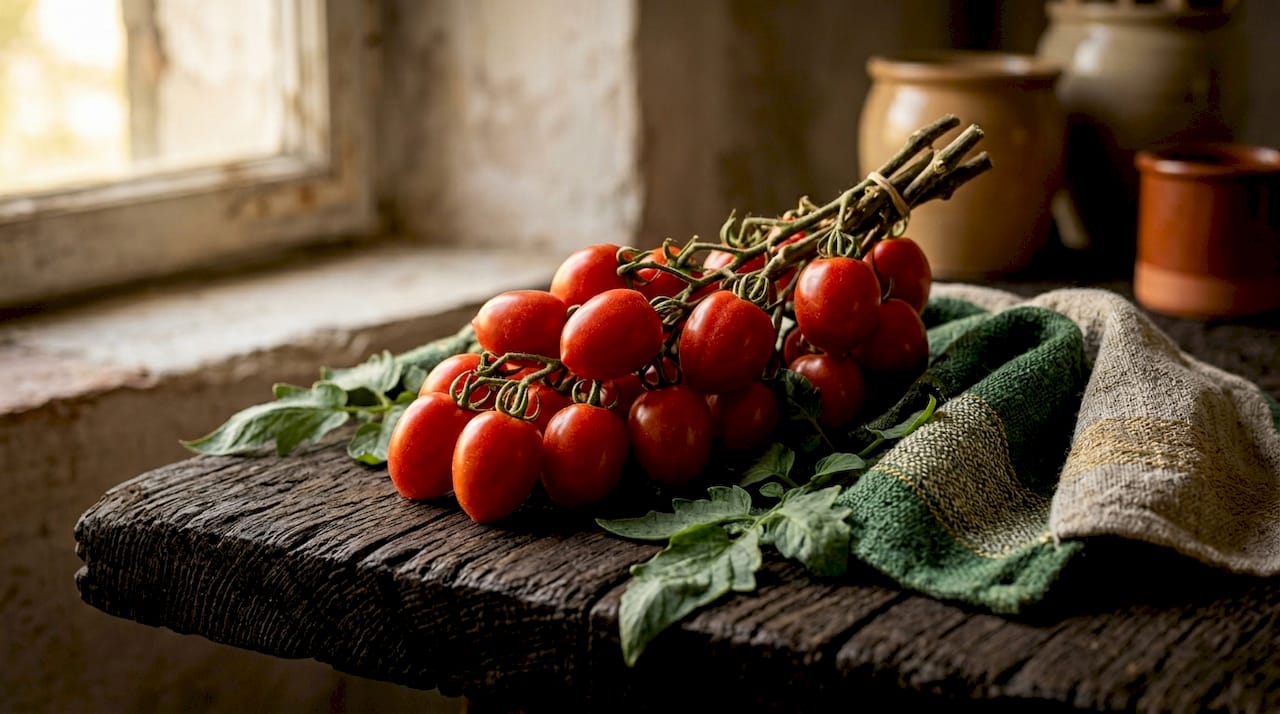
Officially known as Pomodorino del Piennolo del Vesuvio DOP, this is a small cluster tomato grown in the volcanic lands around Vesuvius in southern Italy. Its fruits are tiny, oval, and gently pointed at the tip. What sets it apart from supermarket tomatoes is not just flavor, but the entire philosophy behind its cultivation and storage.
The real secret lies in the marriage of two traits: an unusually thick, firm skin and a centuries-old technique of hanging the tomatoes in bunches. Together they allow the fruit to keep for months without refrigeration or preservatives. For a tomato, that’s extraordinary. While ordinary varieties soften within days, the Piennolo stays firm, aromatic, and ready to enjoy well into winter.
At Minnelea we treasure this variety because it embodies everything we love about southern-Italian fine food: tradition that works, and flavor that speaks for itself.
What makes the Piennolo tomato unique?
The fruits are small, brilliant red, and oval, ripening in about 60–70 days. Their skin is noticeably thicker than that of other tomatoes, the flesh dense and low in water. This texture is precisely what makes them so shelf-stable and so intensely flavorful.
The taste is what chefs call full: spicy, with pronounced sweetness and a lively acidity that balance each other beautifully. Eaten raw, the tomato sings on the tongue. In the pan it caramelizes quickly and gives sauces a depth you simply can’t achieve with watery varieties.
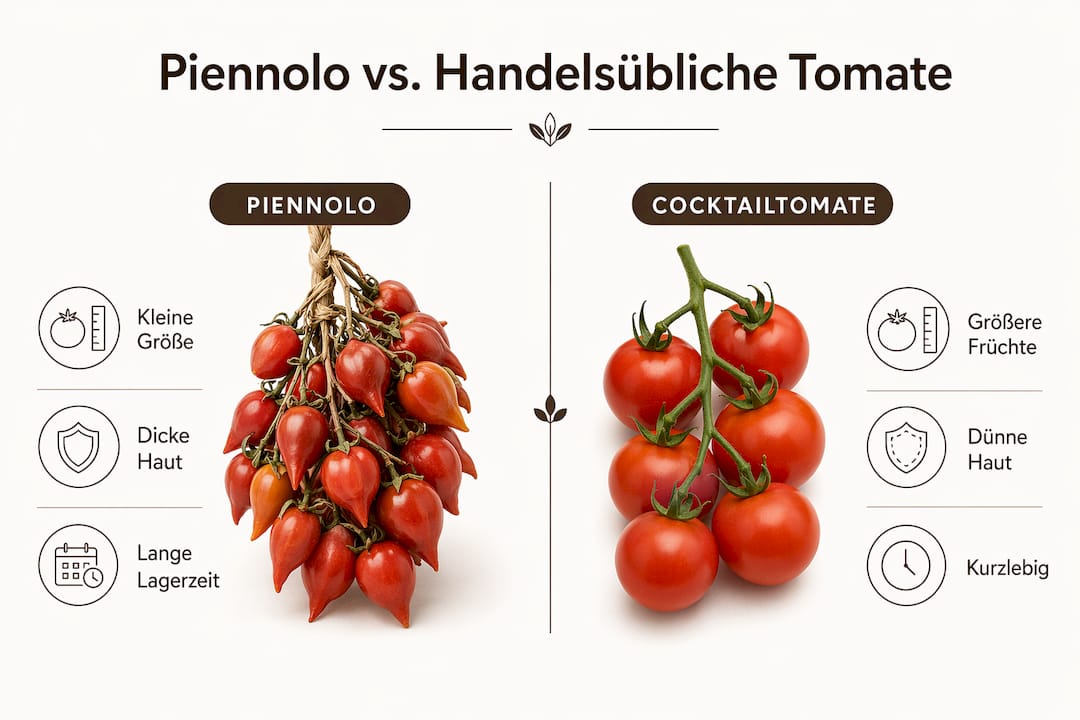
| Feature | Piennolo Tomato | Standard Cocktail Tomato |
|---|---|---|
| Fruit size | Small, 20–35 g | Small to medium |
| Skin thickness | Very thick, firm | Thin to medium |
| Flavor | Spicy, sweet-tart, intense | Mild, often watery |
| Shelf life | Months without refrigeration | Days to weeks |
| Origin | Vesuvian area, DOP-protected | Industrial, worldwide |
The comparison is clear: the Piennolo is no commodity; it’s a product with personality. Its storability isn’t the result of modern technology, but of decades of careful selection and artisanal care.
Pro tip: If you buy fresh Piennolo tomatoes, let them ripen at room temperature. Never refrigerate them—cold destroys aroma and softens the skin.
How does traditional storage work?
The hanging method is the heart of this variety. After harvest, the clusters are tied into large bunches called Schiocche and hung in a cool, airy place. This keeps the tomatoes fresh for months. Historical records show this technique has been used around Vesuvius for centuries to carry the late-summer harvest into winter and spring.
The science is straightforward: hanging in bunches uses natural air circulation and minimizes pressure points, preserving texture. The fruits barely touch, moisture can escape, and the thick skin prevents shriveling or rot. It’s cold-chain logistics without electricity.
How to replicate the tradition at home:
- Use only fully ripe, undamaged fruit. Bruises or cracks invite mold.
- Tie the clusters loosely with kitchen twine, taking care not to squeeze the tomatoes.
- Hang the bundle in a cool, dry spot with good airflow—a cellar or pantry works well.
- Check regularly and remove any soft or discolored tomatoes before they affect the rest.
- Stored this way, the tomatoes can last up to six months and continue to ripen slowly.
The difference between hanging and canning is striking. Fresh-hung tomatoes keep their firm skin and crisp flesh, while canned ones vary in texture and freshness. Both have their place, but hanging best preserves the experience of a fresh tomato.
Pro tip: Don’t hang the bundle near fruit. Apples and pears release ethylene that will over-ripen the tomatoes.
Where does it come from and how is DOP regulated?
The Piennolo tomato is grown in the Vesuvian area of Campania, southern Italy. Volcanic soil, rich in minerals, imparts a complexity of flavor impossible to replicate elsewhere. This terroir is why the variety is so tightly bound to its origin.
Since 2009 it has been DOP-certified, meaning only tomatoes from 18 designated municipalities around Vesuvius may bear the name. The DOP seal guards against imitation and guarantees that cultivation, harvest, and storage follow strict rules.
| Feature | Details |
|---|---|
| Growing area | 18 municipalities around Vesuvius, Campania |
| DOP certification | Since 2009 |
| Soil type | Volcanic, mineral-rich |
| Control body | Consortium of Piennolo producers |
| Label | Pomodorino del Piennolo del Vesuvio DOP |
For consumers, the DOP seal offers concrete assurance. A Piennolo tomato with the DOP mark is traceable and authentically regional. Products marketed as Piennolo without the seal may be the same variety, but they are not subject to origin or production controls—and the difference is palpable.
How is the Piennolo tomato used in the kitchen?
The Piennolo shines brightest in recipes that let it take center stage. Elaborate preparations miss the point. This tomato needs no support—only space.
Classic dishes and uses:
- Spaghetti al Pomodoro: The iconic pairing of Spaghetti di Gragnano with halved Piennolo tomatoes, good olive oil, garlic, and fresh basil. The tomatoes are warmed only briefly to keep their freshness.
- Pizza Napoletana: On an authentic Neapolitan pizza, Piennolo tomatoes replace tomato sauce. They’re scattered raw over the dough and flash-baked in a wood-fired oven. The result is more intense than any sauce.
- Bruschetta: Halved Piennolo tomatoes with sea salt, olive oil, and oregano on toasted bread. Nothing more is needed.
- As preserves: Whether jarred in olive oil or turned into passata, Piennolo tomatoes retain their aroma through winter. Our sun-dried tomatoes in extra-virgin olive oil from Cilento carry this preservation tradition forward.
- In meat and fish dishes: The tomato’s acidity cuts through rich flavors and enlivens dishes with cod, lamb, or eggplant.
Pro tip: Add a splash of top-quality olive oil only after the pan is off the heat. Heat destroys the delicate polyphenols in the oil, and the Piennolo deserves the best companion.
Anyone wishing to explore southern-Italian regional cuisine will find the Piennolo tomato an ideal starting point. It is no substitute ingredient—it is a leading lady.
Can I grow and store Piennolo tomatoes myself?
The Piennolo is robust, low-maintenance, and prolific. The plant grows to about 150 cm and sets abundant fruit in clusters. Even in cooler climates outside Campania it can thrive, provided the basics are right.
Key points for successful cultivation:
- Location: Full sun, sheltered from strong wind. At least six hours of direct light daily.
- Soil: Well-drained, not overly rich. Excess nitrogen promotes foliage at the expense of flavor.
- Sowing and planting: Start seeds indoors in February, transplant after the last frost in May.
- Care: Regularly pinch out side shoots to encourage fruiting. Water moderately—avoid waterlogged soil at all costs.
- Harvest timing: Only fully ripe fruit delivers the signature flavor and storage quality. Late summer to early autumn is ideal.
- Cluster harvesting: Remove entire clusters, not individual tomatoes. The cluster protects the stems and extends shelf life when hung.
Pro tip: In northern climates, plant against a south-facing wall. Reflected heat compensates for fewer sun hours and brings the fruit to full ripeness.
Home hanging lets even hobby gardeners enjoy Piennolo tomatoes through winter. The result is not just a pantry staple but a living piece of southern-Italian tradition in your own cellar.
Key takeaways
The Piennolo tomato is the only DOP-protected tomato of the Vesuvian area, whose storability and flavor are inseparable from its thick skin and traditional hanging method.
| Point | Details |
|---|---|
| Definition & origin | Historic variety from 18 municipalities around Vesuvius, DOP-certified since 2009. |
| Characteristics | Small, oval fruit with thick skin, spicy-sweet-tart flavor, 60–70-day ripening cycle. |
| Traditional storage | Hanging in bunches without refrigeration keeps them for up to six months. |
| Flavor profile | Intense, full-bodied, balanced; best showcased in simple Mediterranean dishes. |
| Cultivation | Robust and prolific, even in cooler climates; harvest late summer for optimal storage. |
My view: why the Piennolo tomato deserves more attention
I’ve worked with southern-Italian producers for years, and the Piennolo is one of the few varieties that still surprises me every time. Not because its story is new—it’s well documented—but because of the reaction when people taste it for the first time.
What fascinates me most is the sustainability of the hanging method. Today we talk a lot about food waste and energy-efficient storage. The Piennolo tomato solved this problem centuries ago—no electricity, no plastic, no refrigeration. That isn’t nostalgia; it’s a working model.
What I often see overlooked: many buy Piennolo in jars and think they know the variety. The jar is good, but it isn’t the same. Once you’ve eaten a fresh, home-hung Piennolo in January, the difference is immediate—firmer texture, fresher aroma, livelier acidity. I urge every gourmet to buy fresh DOP tomatoes at least once and hang them at home. The effort is minimal; the reward, enormous.
For home gardeners this variety is a hidden gem. It’s easier to grow than many other heirlooms, yields generously, and delivers a product you simply cannot find in the supermarket. If you care about preserving varietal diversity, start here.
— carmine
Discover Piennolo tomatoes and southern-Italian delicacies at Minnelea
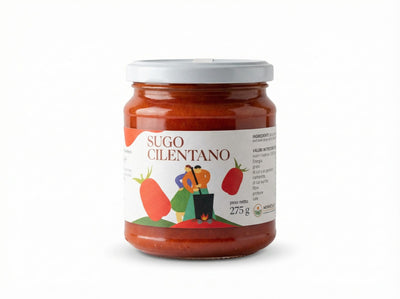
If you love the world of the Piennolo tomato, you’ll appreciate the broader fine-food tradition of southern Italy. At Minnelea we craft small-batch products from Cilento that share the same respect for ingredients and tradition. Our Cilentan tomato sauce is cooked in tiny batches from select regional tomatoes, bringing the aroma of southern Italy straight to your table.

From antipasti in native extra-virgin olive oil to hand-made confettura, Minnelea stands for what real southern-Italian cuisine is about. If you’re looking for Mediterranean fine food as a gift or for your own table, our artisan collection offers a carefully curated selection that pairs perfectly with Piennolo tomatoes and everything the region has to offer.
FAQ
What exactly is the Piennolo tomato?
The Piennolo tomato is a historic, small variety from the Vesuvian area of Campania, protected since 2009 as Pomodorino del Piennolo del Vesuvio DOP. It is distinguished by its thick skin, spicy-sweet-tart flavor, and traditional hanging method.
How long do Piennolo tomatoes keep?
When traditionally hung in bunches, Piennolo tomatoes can keep for up to six months in a cool, dry, well-ventilated place without refrigeration or preservatives.
Where can I buy genuine Piennolo tomatoes?
Look for DOP-certified Piennolo tomatoes in specialty delicatessens, Italian importers, and reputable online retailers. The DOP seal is your guarantee of authenticity.
Which recipes are best for Piennolo tomatoes?
Simple dishes like spaghetti al pomodoro, Neapolitan pizza, and bruschetta let the intense flavor of the Piennolo shine. The tomato needs little more than good olive oil and a pinch of salt.
Can I grow Piennolo tomatoes in Germany?
Yes. The variety is robust and adapts to cooler climates. Provide a sunny, sheltered spot and harvest fully ripe fruit in late summer for the best storage results.
Recommendations
- Cilento Sun-Dried Tomatoes in EVOO 200g · Minnelea – Azienda Agricola Minnelea
- Cilento Peppers in EVOO · Mediterranean Antipasto · Minnelea – Azienda Agricola Minnelea
- Sun-Dried Tomato Pâté 200g · Cilento Artisan · Minnelea – Azienda Agricola Minnelea
- Cilento Tomato Sauce · Traditional Recipe · Minnelea – Azienda Agricola Minnelea