
Artisanal Italian Vegetables in Oil: the Complete Guide (Varieties, Values, Pairings)
Sott'olio preserves are among the oldest in the Italian gastronomic tradition. Fresh seasonal vegetables, a brief cooking, preservation in oil: a technique born to bring summer to the winter table, long before refrigerators existed.
 | From our selection Fig JamHandmade, no preservatives. € 7,90 Discover → |
Today, artisanal Italian vegetables in oil are one of the few products where the difference between industrial and local production is obvious from the first bite. This guide covers everything: varieties, regional traditions, nutritional values, how to recognise quality, pairings.
What a sott'olio is (technical definition)
A sott'olio is a preserve of vegetables (more rarely fish or meat) prepared with this process:
- Selection and trimming: fresh seasonal vegetables, washed and cut
- Blanching in water and vinegar: a few minutes, to soften and acidify (microbiological safety)
- Drying: at room temperature or forced
- Jarring: in a glass jar with oil (usually extra virgin) and aromatics (garlic, chili, herbs)
- Pasteurisation: the sealed jar is heated to guarantee shelf life
The final pH must stay below 4.6 to prevent botulinum risk. Serious producers apply strict HACCP protocols (EU Reg. 2073/2005).
The main Italian sott'olio by regional tradition
Southern preserves
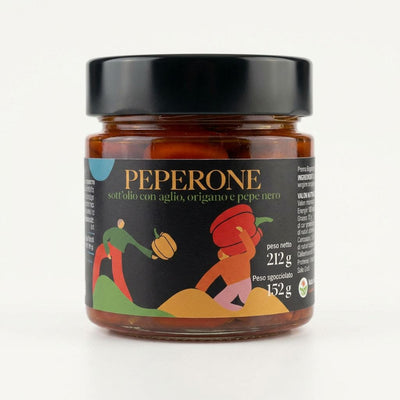
- Peppers in oil (Campania, Puglia, Calabria): the heart of the southern tradition. Deep dive on peppers in oil →
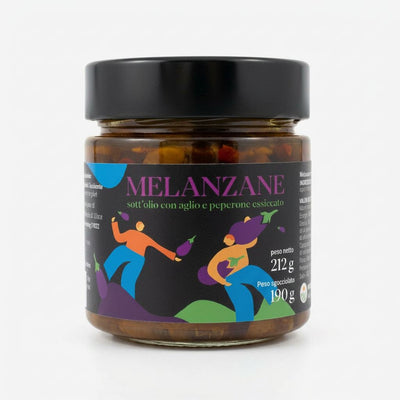
- Eggplants in oil (Campania, Sicily): in slices or julienne
- Chili peppers in oil (Calabria): whole or tuna-stuffed
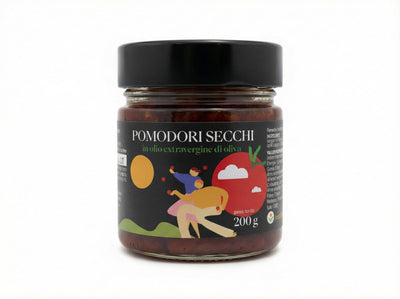
- Sun-dried tomatoes in oil (Sicily, Puglia): sun-dried, then rehydrated in oil
- Pumpkin in oil (Campania): rare, native round Neapolitan variety
Central preserves
- Artichokes in oil (Lazio, Tuscany, Liguria): whole young hearts
- Mushrooms in oil (Umbria, Tuscany, Piedmont): porcini, honey mushrooms
- Baby onions in oil (Emilia, Veneto): small, sweet-tangy
Northern preserves
- Taggiasca olives in oil (Liguria): small, sweet
- Asparagus in oil (Veneto, Friuli): white or green
- Mixed vegetables in oil (Piedmont, Lombardy): peppers + courgettes + carrots
Artisanal vs industrial: the difference
Five concrete parameters to recognise quality. Dedicated deep dive: the spoon test →.
| Parameter | Artisanal | Industrial |
|---|---|---|
| % vegetable (drained weight) | 60-70% | 40-50% |
| Type of oil | Extra virgin or olive | Often seed/sunflower |
| Preservatives | None | Often present (E200-E219) |
| Vegetable origin | Specific (region, variety) | Often generic |
| Cut | Irregular (by hand) | Uniform (machine) |
Average nutritional values (per 100 g)
They vary by vegetable type and oil absorbed. Indicative data from the CREA tables.
| Preserve | Calories | Fat | Carbs | Protein | Fibre |
|---|---|---|---|---|---|
| Peppers in oil | 110-140 | 8-11 | 5-7 | 1-1.5 | 1.5-2.5 |
| Eggplants in oil | 150-180 | 13-16 | 3-5 | 1-2 | 2-3 |
| Artichokes in oil | 120-160 | 10-14 | 4-6 | 1.5-2.5 | 3-4 |
| Sun-dried tomatoes in oil | 200-260 | 15-19 | 12-16 | 4-5 | 5-7 |
| Mushrooms in oil | 90-130 | 8-12 | 2-4 | 2-3 | 1-2 |
| Olives in oil | 230-280 | 22-26 | 4-6 | 1-2 | 3-4 |
Almost all the calories come from the oil. Draining reduces calories by 30-40%.
How to choose a sott'olio from the label
The 6 quick checks to spot quality — detailed label guide →.
- First ingredient: must be the vegetable (not oil or water)
- Declared % of vegetable: above 50%
- Type of oil: extra virgin or olive, not "generic vegetable"
- Short ingredient list: max 6-7 items
- Vegetable origin: Italian or a specific EU country
- Drained weight: above 55% of net weight
How to serve them (board and kitchen ideas)
Classic antipasto board
3-5 different preserves + 2-3 cheeses + cured meats + rustic bread. Complete guide to the antipasto board →.
First courses
- Pasta with sun-dried tomatoes and the oil from the jar
- Linguine with artichokes in oil and pecorino
- Risotto with pumpkin in oil and thyme
Mains and sides
- Frittata with artichokes or eggplants
- Pan-cooked chicken or fillet with chili peppers in oil
- Spelt salad with mixed preserves
Bruschettas and crostini
- Rustic bread + pepper in oil + ricotta
- Bread + sun-dried tomatoes + goat cheese
- Bread + eggplants in oil + pecorino shavings
Storage
| State | Duration | Conditions |
|---|---|---|
| Sealed jar, pantry | 24-36 months | Cool, dry, away from sunlight |
| Open jar, fridge | 7-10 days | Covered in oil, clean cutlery, closed container |
| Open industrial jar | 14-21 days | Thanks to added preservatives |
If the oil drops below the level of the vegetables in an open jar, top it up with extra virgin olive oil to prevent oxidation and contamination.
Sott'olio vs pickles
Sott'olio preserves use oil as the preserving liquid, pickles use vinegar. The flavour changes (sott'olio are soft and sweet, pickles crunchy and sour), the nutritional profile changes (pickles are far less caloric), the use in the kitchen changes. Deep dive on the difference →.
The 10 most frequent questions
How long do artisanal preserves last? Sealed jar 24-36 months. Open, 7-10 days in the fridge.
Are they vegan? Most are. Check the label for variants with anchovy, tuna or honey.
Do they contain gluten? Naturally no. Check the label for formal certification if you are coeliac.
Can they be frozen? Not recommended. The structure of vegetables in oil does not survive freezing.
Can the oil in the jar be reused? Yes, it is flavoured. Use it to dress pasta, pizza, bruschettas.
How many calories on average? 100-280 kcal/100g depending on the type. Draining reduces them noticeably.
What does "organic" mean on these products? It certifies how the raw material was farmed. It does not automatically guarantee artisanal production or the absence of additives allowed by the organic standard.
Are they suitable for a weight-loss diet? They are caloric because of the oil. Portion control matters; draining helps. A board portion (30 g drained) provides 40-90 kcal.
Can I make sott'olio at home? Yes, but mind the botulinum risk — correct acidification and sterilisation are essential.
Where can I find artisanal Italian preserves? Delicatessens, farmers' markets, small producers' e-commerce. Detailed labels, clear origin and a mid-to-high price are good indicators.