
Why Handmade Jams Taste Better
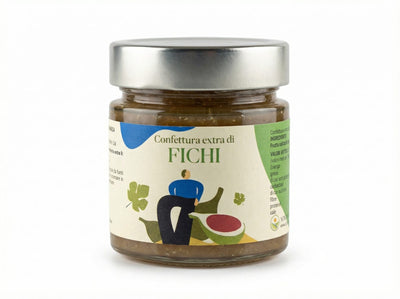
 | From our selection Fig JamHandmade, no preservatives. € 7,90 Discover → |
Standing in front of the supermarket jam shelf, few of us pause to wonder what’s really inside the jar. Yet that question is worth asking. The reason handmade jams taste better than their industrial counterparts isn’t nostalgia or clever marketing—it comes down to raw-material quality, process control and hands-on care. Terms like “confettura”, “fruit spread” and “marmalade” only add to the confusion. This article clears the fog: what truly makes the difference, which technical and sensory factors matter most, and what you should know whether you’re buying or making your own.
Table of Contents
- Key Takeaways
- Handmade vs. Industrial: The Real Differences
- Sensory Advantages of Handmade Jams
- Behind the Technique: Pectin, Sugar and Shelf Life
- New Labelling Rules from 2026
- Making and Thoughtfully Buying Jam
- My Take as a Jam Lover
- Discover Handmade Jams from Minnelea
Key Takeaways
| Point | Details |
|---|---|
| Handwork shapes flavour | Small batches and manual control create livelier aromas than standardised industrial processes. |
| Ingredient choice is decisive | Ripe fruit, less sugar and natural pectin give an authentic texture and fruit note. |
| Lemon juice is no detail | It activates pectin, protects colour and balances sweetness—an underrated key to perfect jam. |
| New labelling rules from 2026 | From June 2026 all fruity bread spreads may officially be called “marmalade”, not just citrus ones. |
| Conscious buying pays off | Watch for fruit content, short ingredient lists and small-scale production to find markedly better quality. |
Handmade vs. Industrial: The Real Differences
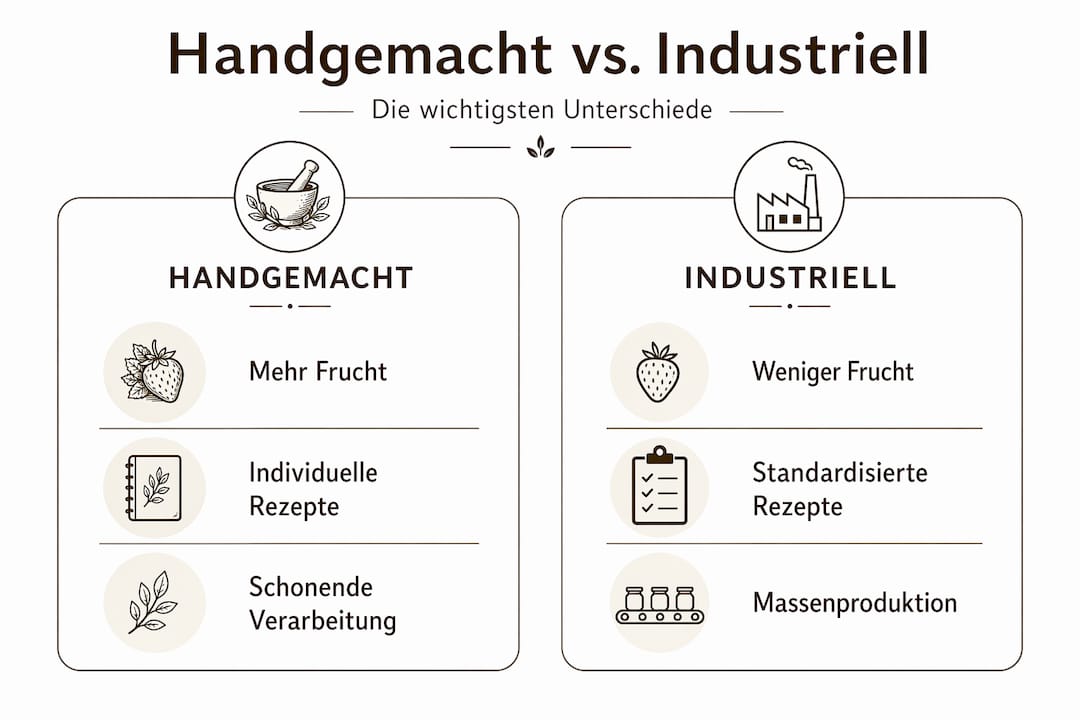
The most obvious difference is scale. Industrial producers turn out thousands of jars a day, optimised for uniform consistency, long shelf life and stable transport. Standardised jams often rely on higher sugar and industrial preservatives to achieve identical flavour profiles. That isn’t a criticism—it’s simply how large systems work. When you’re feeding millions, individual fruit selection isn’t an option.
Craft producers work differently. Fruit choice, ripeness and recipe are deliberately managed, directly influencing texture, aroma and fruit note. Small batches and hands-on control allow adjustments throughout the entire cooking process—something industrial lines simply cannot offer.
What Actually Changes
- Fruit content: Handmade jams often use 50–65 % fruit, while cheaper industrial products may only meet the legal minimum.
- Sugar level: Industrial versions favour higher sugar for stability and transport, masking delicate fruit notes.
- Pectin: Artisan recipes can rely on the fruit’s own pectin or targeted additions instead of synthetic gelling agents.
- Cooking time: Overcooking destroys aroma. Small batches let you hit the sweet spot precisely.
| Feature | Handmade | Industrial |
|---|---|---|
| Fruit content | High, often 50–65 % | Often at the legal minimum |
| Sugar level | Flexible, often reduced | High for stability |
| Aroma profile | Vivid, individual | Uniform, standardised |
| Shelf life | 6 months to 2 years | Often 2 years and more |
| Ingredients | Few, natural | Often additives and colourings |
Sensory Advantages of Handmade Jams
Anyone who has ever spread a truly good handmade jam on buttered bread knows the feeling: it sings on the tongue. The fruit speaks. That isn’t a trick—it’s the result of raw material meeting process.
Handmade jams often achieve a better balance of sweetness, acidity and texture than standardised industrial products. This balance is no accident; it is the outcome of deliberate choices made during cooking.
Fruit Choice and Ripeness
Overripe fruit contains more natural pectin and deeper aromas. Industrial buyers select by price and availability; artisans can choose variety and harvest timing. An apricot from southern Italy at peak ripeness tastes fundamentally different from a calibrated, underripe fruit bred for bulk transport.
Pro tip: When making jam at home, opt for slightly overripe fruit. It gels better and develops deeper flavours than underripe produce.
Flexibility in the Recipe
Less rigid rules give craft producers a clear edge: ingredients such as vanilla, lemon zest, fresh ginger or a splash of Limoncello can enrich the aroma in ways no standardised process allows. The jam becomes something personal—it carries the maker’s signature.
The perception that “jam used to taste better” can be explained by artisanal techniques and materials, not mere nostalgia. Copper pans, for example, positively influence gelling and are favoured by experienced jam cooks for good reason.
Behind the Technique: Pectin, Sugar and Shelf Life
Pectin is the natural gelling agent in fruit. It only fully activates under the right conditions: sufficient heat, enough acidity and the correct sugar level. Miss one of these and the jam stays runny or barely spreadable.
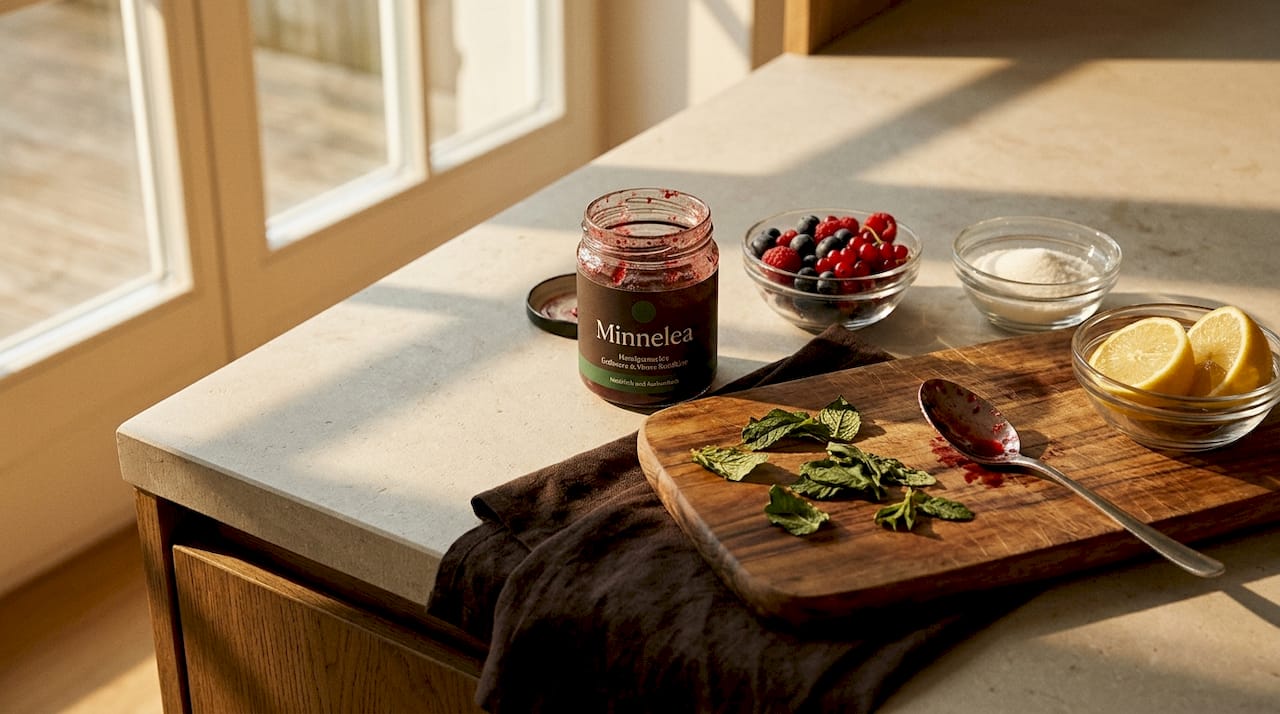
Lemon juice activates pectin by lowering the pH and simultaneously improves gelling power and colour. This is not an optional step—it is the foundation for a stable, vibrantly coloured jam. Gelling ability depends critically on pH, which is why controlled cooking combined with lemon juice is central.
Sugar Ratio and Its Effect
| Sugar-to-Fruit Ratio | Shelf Life (unopened) | Fruit Note |
|---|---|---|
| Up to 2 years | Moderate, sweetness dominant | |
| 1:2 (reduced sugar) | 6–12 months | Intense, fruity |
| 1:3 (low sugar) | 3–6 months | Very intense, short shelf life |
With a lower sugar ratio shelf life shortens, but fruitiness is perceived far more strongly. This is a conscious choice, not a flaw. Those who seek quality often accept shorter storage times.
Unopened jam lasts between 6 months and 2 years depending on sugar content. Once opened, store it chilled and use within a few weeks.
Pro tip: Lemon juice not only prevents gelling problems but also protects colour. Ascorbic acid acts as an antioxidant, ensuring the jam still glows and tastes fresh months later.
New Labelling Rules from 2026
For years in Germany the term “marmalade” was legally reserved only for citrus-based spreads. Everything else had to be labelled “confettura” or “fruit spread”. This caused everyday confusion, since most people use “marmalade” for any fruity preserve.
From June 2026 all fruity bread spreads in Germany may officially be called “marmalade”, not just citrus products. The new EU regulation greatly simplifies consumer labelling and makes quality comparisons easier.
What does this mean for you?
- When shopping: Products labelled “marmalade” will not automatically be better or worse after 2026. The name says nothing about quality.
- Judging quality: Keep checking the ingredient list, fruit content and production notes. “Marmalade” will simply be an umbrella term.
- For craft producers: Simpler labelling creates transparency and clearer communication with consumers. Small makers can label more straightforwardly.
- For the market: Competition between artisanal and industrial products becomes more transparent because unified terms are used.
The regulation doesn’t change the product; it changes the conversation. Quality is still recognised by ingredients and craft, not by the label.
Making and Thoughtfully Buying Jam
Whether you prefer to make your own or buy consciously, the guiding principles are the same. Here are the key steps to achieving top quality.
- Select ripe fruit: Raw material is everything. Overripe, aromatic fruit delivers more pectin and deeper flavour than hard, industrially harvested produce. Higher fruit quality and process control are the key advantages of handcrafted products.
- Balance the sugar: A 1:1 ratio gives long shelf life. A 1:2 ratio (fruit to sugar) gives more fruit flavour. For personal use you can safely reduce further.
- Don’t skip lemon juice: Two to three tablespoons of fresh lemon juice per kilo of fruit is enough. It lowers pH, activates pectin and preserves colour.
- Sterilise jars: Clean, hot-rinsed jars are essential. Mould almost always results from poor hygiene, not from the jam itself.
- Test the set: Drop a little onto a chilled plate. If it runs, keep cooking. Skip this step and you risk a runny result.
- Store cool and dark: Unopened at room temperature or cooler. Once opened, refrigerate and use within 4–6 weeks.
Pro tip: When buying handmade jam, study the label. Fewer than five ingredients, no colourings, no flavour enhancers—those are good signs. A worthwhile comparison of raw-material quality and process tells you more than vitamin content.
If you have the choice, buy from regional producers, weekly markets or specialty delicatessens. The jar with the longest ingredient list is rarely the best.
My Take as a Jam Lover
Over the years I’ve opened many jars and tasted even more. What continually surprises me: the difference between a truly handmade jam and a good industrial one lies less in sugar content or or colour than in complexity.
A handmade apricot confettura from southern Italy, cooked in small batches, unfolds in waves. First the sweetness, then the acidity, then a subtle floral note that lingers in the finish. Industrial products are flatter—not bad, just one-dimensional.
From experience I stress: handmade is not an automatic guarantee of quality. Small producers can make bad jam too. The decisive factor is the flexibility during cooking and the willingness to adjust every single batch. Those who cook by template produce by template.
I’ve also learned that most people underestimate how much the ripeness of the fruit determines the final product. A fig harvested one day too early makes a different jam than a fully ripe one. That is where industrial logic and artisanal logic fundamentally diverge.
My advice: buy fewer jars, but better ones. And if you ever have the chance, watch a producer at work. It will change how you perceive jam forever.
— carmine
Discover Handmade Jams from Minnelea
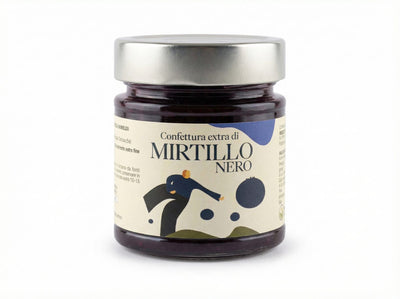
If reading this has awakened a craving for genuinely artisanal jam, take a look at the range from Minnelea. Every jar is produced in the Cilento region of southern Italy in small batches, using carefully selected local ingredients and no artificial additives.

From the luminous citrus marmalade with orange and lemon to the aromatic apricot confettura and the deep forest-fruit confettura, every glass reflects what artisanal quality means. Explore the full selection of handmade marmalades and fruit spreads in the Minnelea shop—perfect as gifts, daily indulgences or inspiration for your own kitchen.
FAQ
What makes handmade jam better than industrial?
Handmade jam scores with higher fruit content, deliberate ingredient choices and control over cooking time and texture. The result is livelier, more complex flavour than standardised mass products.
How long does handmade jam keep?
Unopened, between 6 months and 2 years depending on sugar content. Once opened, store in the fridge and use within 4–6 weeks.
What are the best ingredients for homemade jam?
Ripe fruit, sugar in the right ratio and fresh lemon juice are the basics. Lemon juice activates pectin, stabilises the set and preserves colour.
Can everything really be called marmalade from 2026?
Yes. From June 2026 a new regulation in Germany allows all fruity bread spreads to be labelled “marmalade”, not just citrus ones. The quality itself remains unchanged.
What to look for when buying handmade jam?
Look for short ingredient lists—four to five items max—high fruit content and no colourings or flavour enhancers. Small batches and transparent origin statements are further signs of genuine craft.
Recommendations
- Cilento Orange and Lemon Marmalade · Artisan · Minnelea – Azienda Agricola Minnelea
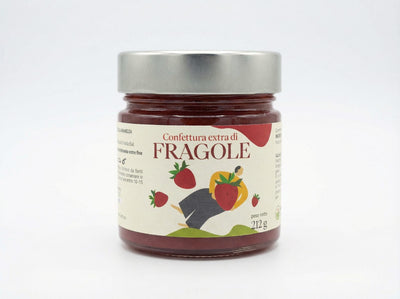
- Cilento Strawberry Jam · 130% Fruit · Minnelea – Azienda Agricola Minnelea
- Cilento Washington Orange Marmalade · Artisan · Minnelea – Azienda Agricola Minnelea
- Cilento Lemon Marmalade · WineHunter Gold · Minnelea – Azienda Agricola Minnelea